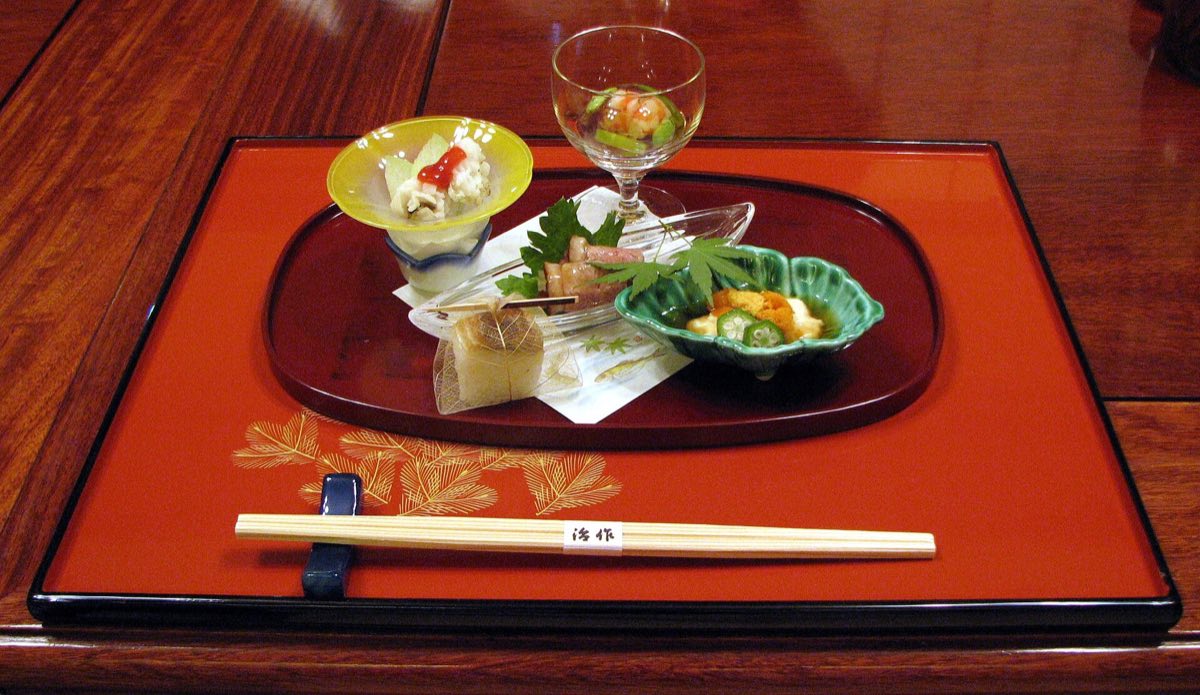
Is kaiseki worth it
in Kyoto?
Lunch at the same house runs roughly half of dinner. A mid-tier kaiseki lunch is ¥7,000–10,000 against ¥20,000–30,000 for dinner, from the same kitchen, with one or two fewer courses and the same craft. Do it once — it is Kyoto's defining meal and the city invented it — and go in with the right expectation: two and a half to three hours of deliberate subtlety, closer to a cultural performance than to a blowout dinner. Palates expecting punch come away disappointed and say so. Book one to three months ahead for the famous houses; ¥4,000–8,000 gets you in at the excellent lower rungs with a week's notice.
The kaiseki value ladder
Seven rungs from a ¥4,000 counter to a ¥139,500 course. Prices move seasonally and with the yen — treat these as the band, and confirm when you book.
| Restaurant | What it is | Price | Book by | Verdict |
|---|---|---|---|---|
| Giro Giro Hitoshina | Modern kaiseki at a counter, no jacket, no hush, chefs plating in front of you | ¥4,000–5,000 dinner | A week or two | WORTH IT |
| Hyotei Bekkan | The asagayu rice-porridge lunch — a three-star lineage for the price of a steak. The single best-value formal meal in Kyoto | ¥6,000–8,000 | Weeks ahead | WORTH IT |
| Roan Kikunoi · Kiyamachi | Kikunoi's younger, looser sibling on the canal. The same technique, a fraction of the ceremony | Lunch from about ¥8,000 · dinner from about ¥15,000 | About a month | WORTH IT |
| Kiyama | A tiny Michelin-starred kitchen, one chef, a handful of seats. The connoisseur's mid-tier pick | Under ¥15,000 | 1–2 months | WORTH IT |
| Kikunoi Honten | Three stars, established 1912, the textbook of modern kaiseki. Bookable through Tableall, which adds a ¥8,000 concierge fee | ¥47,500–139,500 | 2–3 months | DEPENDS |
| Hyotei | Four hundred years old, three stars, and the famous soft-boiled onsen-tamago that has been on the menu for generations | Dinner ¥40,000+ | 2–3 months | DEPENDS |
| Kitcho Arashiyama | The ceiling. A garden pavilion by the river and one of the most expensive meals in Japan | ¥60,000–100,000+ | 3 months | DEPENDS |
If you take one thing from this table: Hyotei Bekkan's asagayu lunch. You eat in the annex of a 400-year-old three-star house for less than a mid-range Tokyo dinner, and it is the meal most people report as the highlight of their trip.
What kaiseki actually is, and who hates it
A kaiseki meal is eight to fourteen small courses following a fixed grammar — a seasonal opener, clear soup, sashimi, a grilled dish, a simmered dish, rice, pickles, a sweet — served over two and a half to three hours in a room designed to make you notice a single flower.
The point is restraint. A dashi is judged on clarity, a piece of fish on the day it was caught, a bowl on whether it matches the month. Portions are small, seasoning is light, and nothing on the table is trying to overwhelm you. When it lands, it is the most precise meal you will eat anywhere.
Who comes away disappointed: anyone expecting flavour intensity, anyone who does not eat fish (kaiseki is fish-and-dashi-led almost by definition — ask about a vegetarian course when you book, and expect a limited yes), anyone in a hurry, and anyone who resents paying ¥20,000 to be quiet for three hours. These are not unreasonable positions. Know which one you hold before you book.
How to behave: arrive on time to the minute, no strong perfume, phones away, and eat each course when it lands rather than photographing it cold. Smart casual is fine almost everywhere; a few of the top houses expect a jacket. Tatami rooms mean shoes off, so wear socks you would be happy for a stranger to see.
Ryokan kaiseki is a different animal — served in your room, often more courses, and bundled into a room rate rather than priced separately. If that is your plan, read the ryokan page first; it is where a big share of a Kyoto budget goes.
How reservations actually work
This is the part that decides whether you eat well in Kyoto. Top kaiseki opens one to three months out, several houses are effectively introduction-only, and the booking platform you choose changes what you can get.
Introduction-only and concierge-gated houses. A tier of Kyoto restaurants — Mizai is the famous example — does not take reservations from strangers at all. Access runs through an existing customer, or through a luxury hotel concierge: this is a genuine, non-theoretical perk of staying at the Ritz-Carlton or the Four Seasons here, and for some travellers it is the reason to.
The platforms, and what each costs. Tabelog takes online bookings for a lot of good places and charges about ¥440 per reservation. TableCheck is usually free and is what many independent Kyoto restaurants now run on. Pocket Concierge is prepaid, English, and strong at the top end. Omakase.in charges around ¥390 and releases seats at a fixed time, which means competing with bots. Tableall charges an ¥8,000 concierge fee and reliably lands Kikunoi — expensive, and it works.
Cancellation reality. No-show and late-cancellation fees of 50–100% of the course price inside 24 to 72 hours are now standard, and the card you booked with will be charged. Kyoto restaurants introduced these because of tourist no-shows. Cancel the moment your plans change and nobody minds.
Book lunch, not dinner. It is not just cheaper — lunch seats are more plentiful, released later, and far less likely to require a two-month campaign. The same rule applies right down the ladder.
Reservation lead times, restaurant by restaurant
How far ahead the seats are actually gone — not when the book opens.
Obanzai, yudofu, shojin and wagashi
Kaiseki is the expensive tip of a much better-value pyramid. These four are the everyday Kyoto identities, and three of them cost less than a hotel breakfast.
Obanzai — ¥3,000–4,000 per person. Kyoto home cooking served as a spread of small dishes at a counter: simmered vegetables, tofu, small fish, pickles. This is what locals actually eat and it is the best-value good meal in the city. Menami (established 1938, on Kiyamachi) is the benchmark; AWOMB does a modern deconstructed version that photographs absurdly well; Nomura opens at 7:00 and serves obanzai for breakfast; Kohaku sits at the smarter end.
Yudofu — ¥3,000–5,000, and a winter dish. Blocks of tofu simmered in kombu water at your table. Be clear-eyed: you are paying ¥4,000 for hot tofu, and the sticker shock is real. What you are buying is the setting — Okutan Nanzenji, established 1635, serves it in a temple garden by Nanzen-ji, cash only, closed Thursdays. Go in November to February when the garden and the pot both make sense. In August it is a strange choice.
Shojin ryori — ¥3,000–9,000. Buddhist temple cuisine: no meat, no fish, no dashi, no onion or garlic, and a 1,200-year-old tradition rather than a modern accommodation. Shigetsu sits inside Tenryu-ji in Arashiyama (¥3,000–9,000 plus the ¥500 garden entry, book 3+ days ahead). Izusen at Daitoku-ji serves it in stacked red lacquer bowls in a subtemple garden. Kanga-an does a ¥6,500 lunch in a temple in the north of the city. All three are the best answer for vegetarians in Kyoto.
Wagashi — ¥1,300–1,600 with tea. Gion Tokuya makes warabi-mochi so soft it has to be eaten with a spoon, around ¥1,300–1,600 with matcha. Kagizen Yoshifusa on Shijo serves kuzukiri — translucent arrowroot noodles you dip in black sugar syrup, made to order and served cold. Both are twenty-minute stops and both are better with matcha than without; more on that on the matcha page.
If you cannot get the reservation
The counters this page recommends are hard to book from abroad without Japanese. A cooking class is the honest substitute — you learn the grammar of the meal, and you eat what you make.
Kaiseki FAQ
How much does kaiseki cost in Kyoto?
Mid-tier lunch is ¥7,000–10,000 and mid-tier dinner ¥20,000–30,000 — the same house, roughly double for the evening. The floor is around ¥4,000 at Giro Giro Hitoshina; the ceiling is ¥139,500 at Kikunoi Honten and ¥60,000–100,000+ at Kitcho Arashiyama.
Should I do kaiseki for lunch or dinner?
Lunch, unless money is no object. It is roughly half the price for the same kitchen, one or two fewer courses, and seats are far easier to get. Hyotei Bekkan's asagayu rice-porridge lunch at ¥6,000–8,000 is the best-value formal meal in Kyoto.
How far in advance do I need to book kaiseki in Kyoto?
One to three months for anything starred. Monk on the Philosopher's Path opens exactly two months ahead at 12:00 JST on TableCheck and sells out in seconds. The ¥4,000–8,000 tier usually takes a week or two. Lunch is consistently easier than dinner.
Can I eat kaiseki without a reservation?
Sometimes. Turn up at the 11:00–11:30 opening or after 14:00 and solo counter seats appear at places that look fully booked online. Failing that, the depachika and the restaurant floors above Takashimaya and Daimaru take walk-ins all day and are genuinely good.
Is kaiseki vegetarian-friendly?
Not by default — dashi and fish run through the whole structure. Some houses will prepare a vegetarian course with notice, and you must say "dashi mo dame" rather than just "vegetarian". The better answer is shojin ryori: Shigetsu at Tenryu-ji or Izusen at Daitoku-ji, both vegan by tradition.
What is the difference between kaiseki and kappo?
Formality and distance. Kaiseki is a fixed seasonal course served in a private or semi-private room over 2.5–3 hours. Kappo is the same technique at a counter, chef in front of you, more conversation, more flexibility and usually less money. Kappo is the easier first experience.
Is a ryokan kaiseki dinner worth it?
Once, and it is a different product — more courses, served in your room, bundled into a room rate rather than priced separately. It also pushes your room into a higher lodging-tax band. Read the ryokan page and the cost page before you book a multi-night stay on that basis.
What happens if I cancel a restaurant booking in Kyoto?
Inside 24 to 72 hours you should expect to be charged 50–100% of the course price, on the card you booked with. This is now standard and it exists because of tourist no-shows. Cancelling early costs nothing and is always fine.