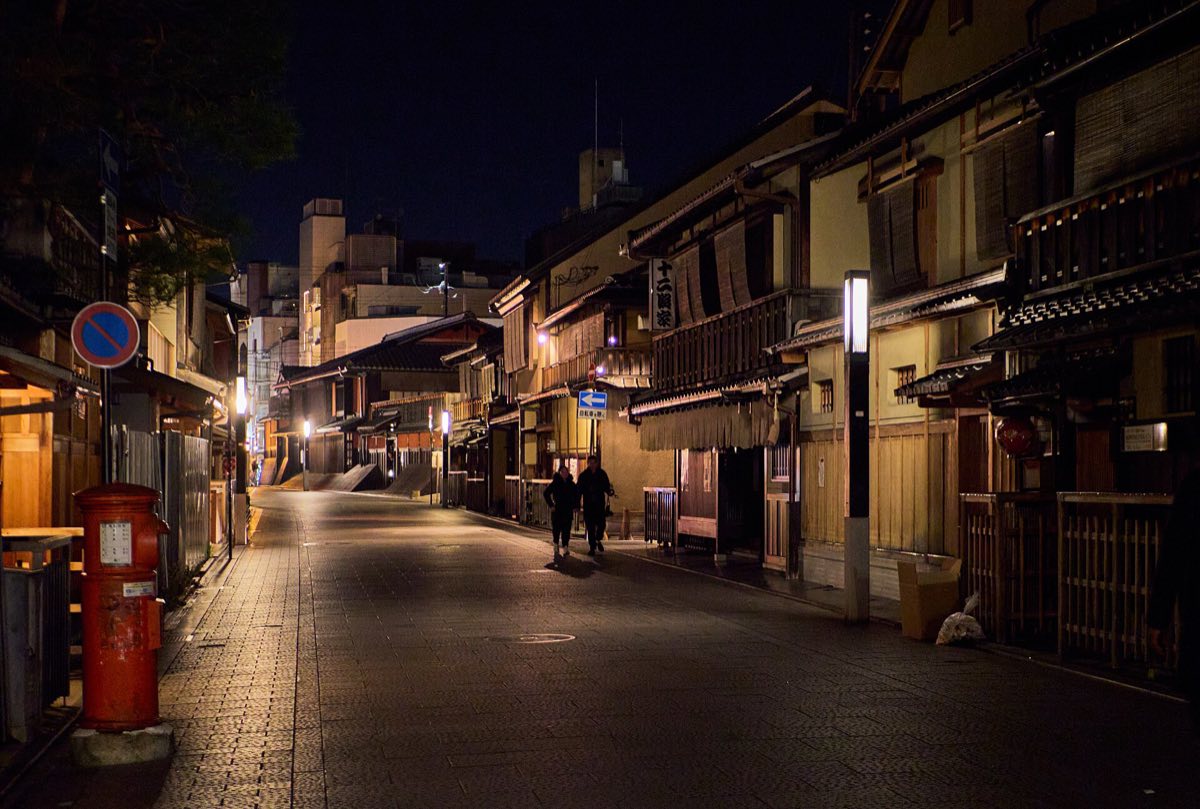
Kyoto tours,
compared
Twelve tour types with real price bands, how far ahead to book, and a verdict on each. Plus the ones you should not book, and why.
Most of Kyoto needs no tour at all. Temple gates take cash at the door and never sell out — a tour is worth paying for because of the guiding and the hour, not to skip a queue that does not exist. There are four types that genuinely earn their money: early-morning access, because getting to the famous places before 09:00 is the whole game and a guide makes it happen; Gion after dark, for the etiquette and the history you cannot read off a wall; tea ceremony, which has the highest review floor of any experience in the city; and the trips where transport is the actual problem — Amanohashidate, Ine, Miyama, where a coach beats three timetables and a rural bus.
Every Kyoto tour type, priced
Prices are typical per-person starting points across the main platforms, converted at ¥158 to the dollar. "Book ahead" is how far in advance the good slots go, not how far ahead the product exists.
| Tour type | Typical price | Duration | Worth it? | Book ahead? | Verdict |
|---|---|---|---|---|---|
| Early-morning temple tour | $55–110 | 4–6 h | Yes — you are buying the hour, not the access | 1–2 weeks | WORTH IT |
| Gion night walk | $25–45 | 1.5–2 h | Yes — etiquette, history, and you will not blunder into a private alley | 3–7 days | WORTH IT |
| Tea ceremony | $30–70 | 45–90 min | Yes — the highest review floor of anything in Kyoto | 3–7 days | WORTH IT |
| Kimono rental + photoshoot | $60–200 | 2–4 h | Depends — lovely photos, and a long uncomfortable day on stone lanes | 2 weeks in sakura season | DEPENDS |
| Food tour | $85–140 | 3 h | Yes, if you cannot read a menu or face a counter alone | 1–2 weeks | WORTH IT |
| Cooking class | $70–120 | 3 h | Yes — and it is rain-proof, which matters in June | 1 week | WORTH IT |
| Cycling and e-bike tours | $60–110 | 3–6 h | Yes — Kyoto is flat and this is the fastest way between districts | 3–7 days | WORTH IT |
| Rickshaw | ¥4,000–5,000 for ~13 min | 13–60 min | Rarely — but the drivers are excellent photographers with private lanes | Walk up | DEPENDS |
| Sake brewery tour, Fushimi | $60–90 | 2–2.5 h | Yes — 40 breweries, canals, and almost no other visitors | 1 week | WORTH IT |
| Geisha show / Gion Corner | ¥5,500 | 50–60 min | Only if you will otherwise never see a maiko | Same day | DEPENDS |
| Day-trip coach | $85–130 | 8–12 h | Only where transport is the problem — Amanohashidate, Ine, Miyama | 1–2 weeks | DEPENDS |
| Hop-on-hop-off bus | $25–40 | All day | No — Kyoto's sights do not sit on one sensible loop | Same day | SKIP |
Nothing here gets you past a queue that exists. Kiyomizu-dera, Kinkaku-ji, Ginkaku-ji, Nijo Castle and Fushimi Inari all take cash at the gate and never sell out. The genuine advance-booking exceptions in Kyoto are the Nintendo Museum lottery, teamLab Biovortex, Katsura and Shugakuin imperial villas, and Saiho-ji.
Cultural experiences
The category with the highest satisfaction and the lowest downside. A tea ceremony is 45 to 90 minutes, English-guided, and slots into the dead 13:00–15:00 window when everywhere outdoors is at its worst.
Food and drink
Kyoto's best small restaurants are eight-seat counters with no English menu and a phone-only reservation line. A food tour is the shortcut past that, and it is the one tour category where the price is genuinely offset by what you eat.
Getting around, and getting out
The one category where a tour solves a problem you cannot solve with a ¥240 train ticket. Amanohashidate and Ine involve two transfers, a boat and a ropeway on separate tickets, and the Tango Railway is not JR-Pass covered.
What's actually available in Kyoto right now
The honest notes on four popular bookings
These are the four places where marketing copy and reality diverge most, and where a bad booking costs the most money.
No operator can guarantee a geisha sighting. Not a walking tour, not a photographer, not a private guide. Kyoto has a few hundred geiko and maiko and they are working, not performing. Any listing that promises one is lying to you. What a good Gion walk actually delivers is history, the district's layout, and the etiquette that keeps you out of the closed private alleys — the ones with signposted fines up to ¥10,000 since April 2024.
Gion Corner is ¥5,500 for an efficient culture buffet. Roughly an hour covering tea ceremony, koto, flower arranging, bunraku puppetry, kyogen comedy and a short maiko dance. If you will otherwise never see a maiko perform, that is decent value and it is the only reliable way to do it on a short trip. If you have already booked a proper tea ceremony and a Gion walk, it will feel rushed and thin — several arts get about seven minutes each. Book it as your only culture booking, or not at all.
Rickshaws are expensive per minute and still sometimes worth it. The standard short course is roughly ¥4,000–5,000 for about thirteen minutes, and an hour runs to ¥19,000 or more for two people. What you are buying is not transport. The pullers are trained guides and very good photographers, they run to a private bamboo lane in Arashiyama that walkers cannot enter, and they will carry your bags up the hill. For a couple wanting one strong photograph, it is defensible. As a way of seeing Arashiyama, it is not.
The best-value maiko viewing in Japan is the spring public dances. Miyako Odori runs through April in Gion, with tickets roughly ¥4,000–7,000 depending on seat and whether tea is included, and the other districts run their own dances across spring. You get dozens of geiko and maiko on a stage, in a theatre, for less than a Gion Corner ticket and a night walk combined. If your trip lands in April, book that instead of everything else in this section.
Kyoto tours FAQ
Do I need a tour to see Kyoto?
No. Every major temple takes cash at the gate, none sell out, and the city is easy to navigate by subway, JR and the Randen tram. Book a tour when you want the 6am hour with company, an explanation you cannot get from a sign, a food counter you could not order at, or transport to somewhere the trains handle badly.
Are Kyoto skip-the-line temple tickets worth it?
There is no line to skip. Kiyomizu-dera, Kinkaku-ji, Ginkaku-ji, Nijo Castle and Fushimi Inari all sell at the gate for cash and have never sold out. Anyone charging a premium for priority entry to a Kyoto temple is selling a product that does not exist.
How much does a tea ceremony cost in Kyoto?
From about ¥1,000 for a short table-style sitting up to ¥10,000 for a private ceremony in a machiya, with the typical English-guided group experience landing around ¥4,000–6,000 for 45 to 90 minutes. It has the highest review floor of any bookable experience in the city — the bad outcomes are rare.
Can a tour guarantee I'll see a geisha?
No, and any listing that claims it can is misleading you. Geiko and maiko move between engagements around 17:45 on Hanamikoji, and you may see one for about eight seconds. Photographing them without consent has been banned since 2019, and the private alleys off the main street have been closed to visitors since April 2024.
Is Gion Corner worth ¥5,500?
Worth it if it will be your only cultural booking — seven traditional arts in under an hour is efficient and genuinely well staged. Not worth it if you have already booked a tea ceremony and a Gion night walk, because the overlap is heavy and each art gets only a few minutes. In April, the Miyako Odori public dances at ¥4,000–7,000 are better value.
Is a rickshaw ride in Arashiyama worth it?
It costs roughly ¥4,000–5,000 for about thirteen minutes, and over ¥19,000 for an hour. That is a lot per minute. It buys you a charismatic guide, a photographer who knows every angle, and access to a private bamboo lane closed to walkers. For one strong photograph as a couple, fine. As transport, no.
Which day trips are worth booking as a tour rather than doing yourself?
Amanohashidate and Ine, and Miyama's thatched village — both involve multiple transfers and rural buses on separate tickets, and the Tango Railway is not JR-Pass covered. Nara (¥760, 45 min), Uji (¥240, 17 min) and Osaka (¥580, 29 min) need nothing but a train ticket. Full comparison on the day-trips hub.