Is a tea ceremony
worth it?
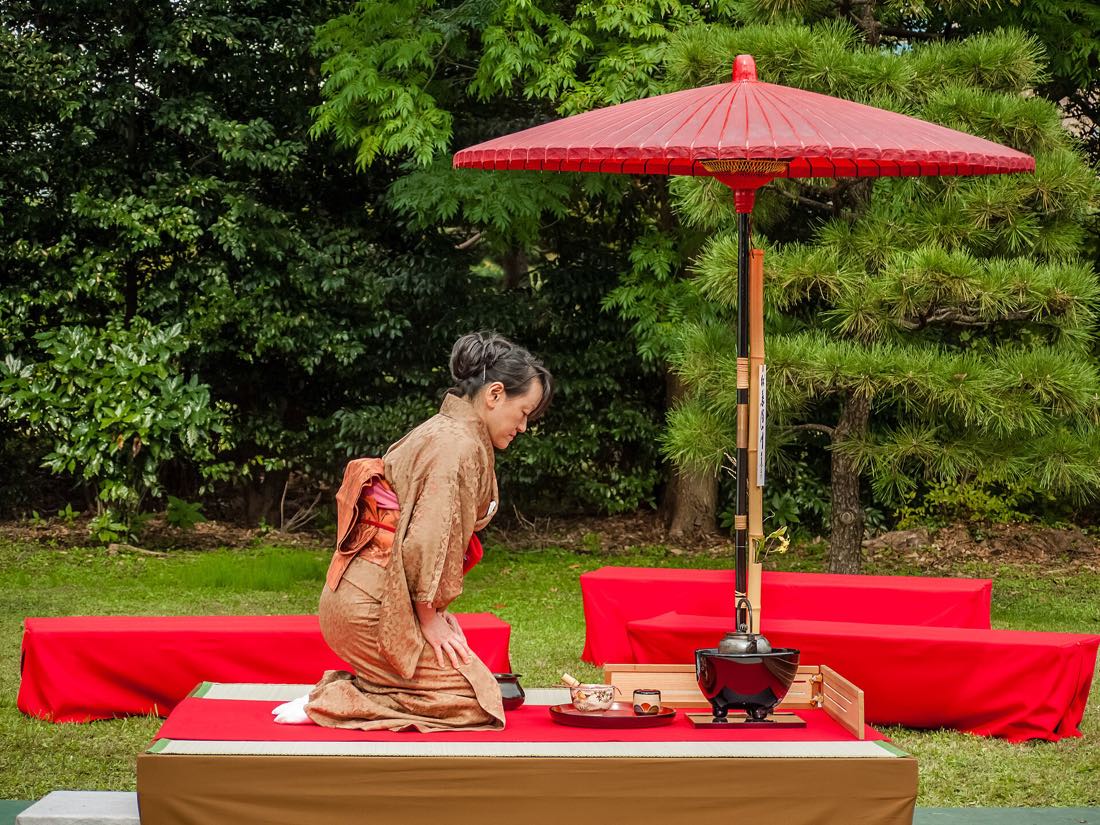
Almost nobody comes out of a Kyoto tea ceremony disappointed, at any price point, which is not true of a single temple on this site. It runs 45 to 90 minutes, you are shown how to receive and drink a bowl of whisked matcha with a sweet, and the good hosts explain the why rather than performing at you. Taihoan in Uji costs ¥1,000 and is the unadorned real thing; ¥3,000–3,500 buys an English-guided group session near Ninenzaka; ¥10,000+ buys a private one. If you cannot kneel, book a table-style ceremony — most operators now offer one.
The tea ceremony price ladder
Five rungs, all of them defensible. The difference between them is English explanation, group size and setting — not the quality of the tea.
| Where | Format | Price | Length | Verdict |
|---|---|---|---|---|
| Taihoan · Uji | Municipal tea house by the river. No frills, no theatre, a real bowl of usucha and a sweet | ¥1,000 | 20–30 min | WORTH IT |
| Camellia · near Ninenzaka | English-guided group ceremony in a machiya, in the middle of the Higashiyama walk | ¥3,000–3,500 group · ¥6,000–10,000 private | 45–60 min | WORTH IT |
| En · Gion | Central, frequent sessions, small groups, and you whisk a bowl yourself at the end | About ¥3,000 | 45 min | WORTH IT |
| Maikoya · kimono combo | Kimono dressing plus the ceremony, photographs included. Half of the time goes on the clothes | ¥4,500–7,500 | 1.5–2 hours | DEPENDS |
| Private machiya ceremony | One host, your group only, questions encouraged, often in a garden tea room | ¥10,000+ | 60–90 min | WORTH IT |
If you are already going to Uji for matcha, Taihoan is unarguable at ¥1,000. If you are not, the ¥3,000–3,500 Higashiyama group sessions are the right call — the English explanation is most of what you are paying for.
What a tea ceremony is actually like
You take your shoes off, you sit, and for roughly an hour someone makes you a bowl of tea with more deliberation than you have ever seen applied to a drink. That is genuinely all of it, and it is better than it sounds.
The sequence: you enter a small tatami room, often through a deliberately low door. The host purifies the utensils in front of you — this takes several minutes and is the part that reads as strange until it is explained. A wagashi sweet is served first and you eat it before the tea, because the tea is bitter and the sugar is the counterweight. Then a bowl of usucha (thin matcha) is whisked and placed in front of you.
What you do: bow slightly, pick the bowl up with your right hand and rest it on your left palm, rotate it about two turns clockwise so you are not drinking from the front, drink in three or four mouthfuls, finish with an audible sip — that last one is a compliment, not a faux pas — wipe the rim, rotate back, set it down. A good host talks you through every step. Nobody is testing you.
What to wear: anything neat, and socks. You will be on tatami with your shoes off and holes in your socks are the only genuine embarrassment available. Avoid strong perfume — it competes with the tea and hosts notice. Trousers or a skirt you can sit in comfortably matter more than formality.
Kneeling: traditional seiza is hard on Western knees and thirty minutes of it is genuinely painful for most people. Many operators now run table-style ceremonies with chairs, and it does not diminish the experience — the machiya table-style session in the booking box below is exactly this. Ask before you book if it matters; every reputable host will tell you straight.
Kimono combos are a separate decision. You will spend 45 minutes being dressed and 45 in the ceremony, and the photographs are the real product. Worth it if you wanted kimono rental anyway; a poor way to experience tea if you did not.
Zazen at Shunko-in, and sleeping in a temple
If what appeals is the stillness rather than the tea, Kyoto's other quiet-room experience is zen meditation with an English explanation — and Shunko-in is the one everybody recommends.
Shunko-in, a subtemple in the vast Myoshin-ji complex in the northwest, runs zazen meditation instruction plus an English tour led by the vice-abbot for roughly ¥3,000–4,000. He is fluent, funny and completely unmystical about it, and the session covers the temple's history alongside the practice. It has one of the highest satisfaction rates of any paid experience in Kyoto, and it takes about 90 minutes. Book through the temple's own site.
Myoshin-ji's subtemples also run shukubo — temple lodging, roughly ¥6,000–10,000 per person including a morning zazen session, sometimes with shojin ryori. It is a plain room, an early start, and the best-value cultural night in Kyoto if you can handle a 6:00 bell. Compare it against a ryokan night, which is more comfort and about four times the price.
Both sit in the same northwest block as Kinkaku-ji and Ryoan-ji, so a morning of temples pairs naturally with an afternoon of sitting still. The Randen tram runs there for ¥250 flat and beats the bus by every measure.
One honest caveat: zazen is 20–40 minutes of not moving. If that sounds unappealing rather than restful, the tea ceremony gives you the same room, the same quiet and a bowl of matcha at the end.
Is a tea ceremony for you?
Tea ceremonies worth booking
Book one to seven days ahead — these fill, but not months out. If you cannot kneel, pick the table-style session; if you want the clothes as well, pick the kimono combo and accept that half the time goes on dressing.
Kyoto tea ceremony FAQ
Is a tea ceremony in Kyoto worth it?
Yes — it has the highest review floor of any paid experience in the city, meaning almost nobody comes out disappointed. It runs 45 to 90 minutes and costs anywhere from ¥1,000 at Taihoan in Uji to ¥10,000+ for a private session. Book one to seven days ahead.
How much does a tea ceremony cost in Kyoto?
¥1,000 at Taihoan, the municipal tea house in Uji. ¥3,000–3,500 for an English-guided group session near Ninenzaka or in Gion. ¥4,500–7,500 for a kimono-plus-ceremony combo. ¥6,000–10,000 for a small private group, and ¥10,000+ for a fully private ceremony.
Do I have to sit on the floor for a tea ceremony?
Not any more. Many Kyoto operators run table-style ceremonies with chairs, and they are just as substantial — the etiquette and the tea are identical. Traditional seiza is genuinely painful for most Western knees after twenty minutes, so ask when you book.
What should I wear to a tea ceremony in Kyoto?
Neat clothes you can sit in, and good socks — you will be on tatami with your shoes off. Skip strong perfume, which competes with the tea. No jacket or formal wear is expected at any of the visitor-facing tea houses.
How long does a Kyoto tea ceremony take?
Between 45 and 90 minutes for a guided session. Taihoan in Uji is shorter, about 20 to 30 minutes, because there is no English narration wrapped around it. Private ceremonies run to 90 minutes because you can ask questions.
Is Shunko-in zazen worth doing?
Yes, if sitting quietly appeals. Roughly ¥3,000–4,000 for meditation instruction plus an English temple tour from the vice-abbot at Myoshin-ji, about 90 minutes, and one of the best-reviewed experiences in Kyoto. Myoshin-ji subtemples also offer temple lodging at ¥6,000–10,000.
Can I do a tea ceremony and matcha shopping on the same day?
Easily, and Uji is the efficient way: 17 minutes and ¥240 from Kyoto Station, Taihoan for ¥1,000, then the tea shops on the Byodo-in approach. Buy your tins in the morning though — see the matcha page on the shortage and the one-tin limits.