Is Arashiyama
worth a night?
Arashiyama is mobbed from 09:00 to 17:00 and then becomes a silent riverside village with mist on the mountain and almost nobody on the bridge. That contrast is the entire argument for sleeping here — one night, ideally with a river-facing ryokan. It is a poor base: everything else in Kyoto is 20 to 60 minutes away, and the restaurants close between 17:00 and 19:00, so you eat where you sleep. The other thing nobody tells you: walk 15 minutes past the bamboo grove into the Sagano temple trail and the crowd disappears at any hour.
Who should stay in Arashiyama, and who should day-trip
Almost everyone should day-trip Arashiyama and go home. The exception is couples on a short trip who want one memorable night, and people who will genuinely be out on the river path at 06:30 and 20:00.
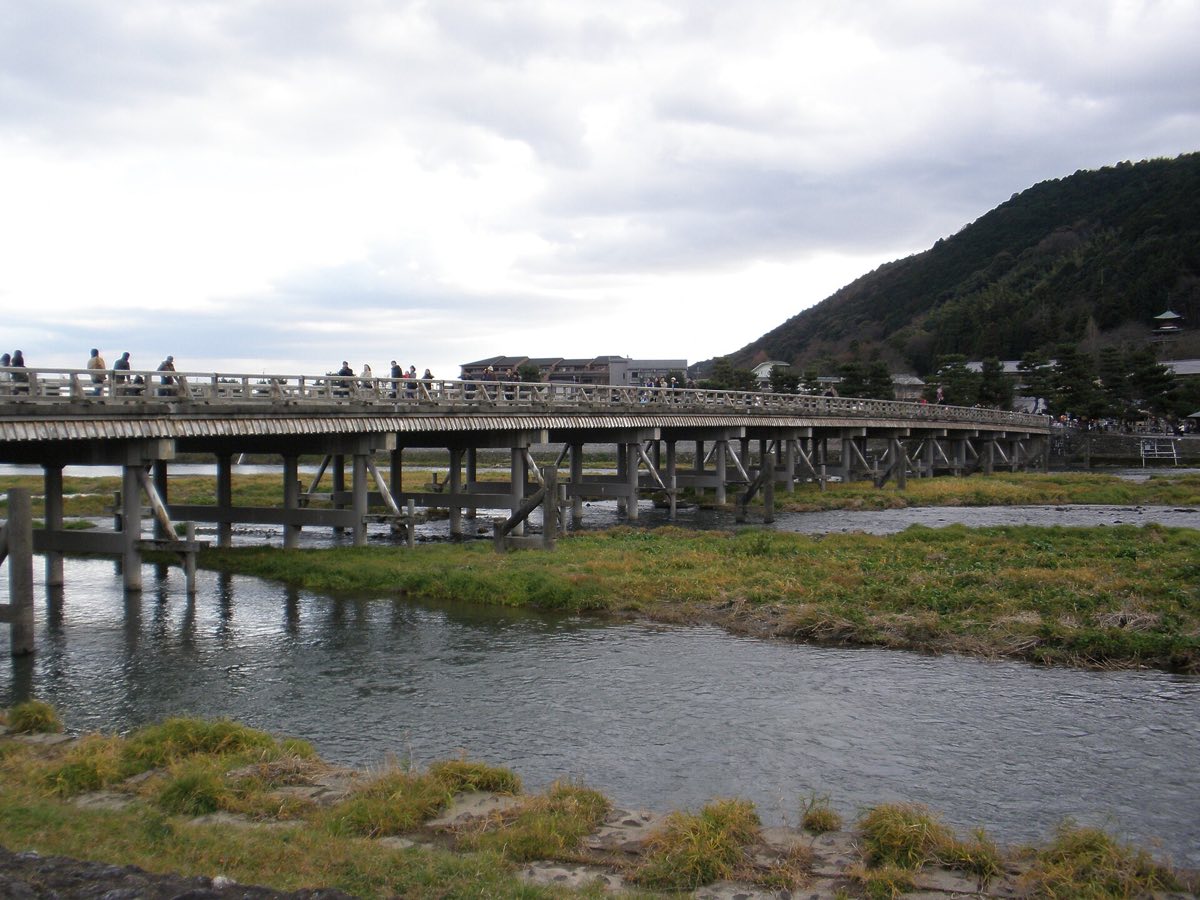
Stay one night if you are a couple, you are celebrating something, or you want a ryokan dinner with the Hozu river outside the window. Between 17:30 and 09:00 the district belongs to about two hundred people, the bamboo grove is empty and free, and the Togetsukyo bridge at dusk is the best half-hour Arashiyama has. None of that is available on a day trip.
Do not base here. From Arashiyama, Gion is 40–50 minutes, Fushimi Inari is around an hour, Kyoto Station is 15 minutes on JR but the bamboo grove is another 10 on foot from the platform. You will spend an hour a day commuting, and you cannot pop back to the room. On a three-night trip that is a wasted third of a day.
Also avoid it if you want dinner options. Most restaurants here close between 17:00 and 19:00, which is exactly when the district gets good. Ryokan solve this by feeding you; hotels without a restaurant do not. Check before you book, because there is no conbini rescue at 21:00.
The practical compromise most people land on: base downtown and come out here at 07:00. Or, if you want the one night, put it last so you are already packed. See the where to stay hub for how it compares.
What to do in Arashiyama — and where the crowd is not
The bamboo grove is a five-minute corridor, not a forest, and at noon it is a queue. Everything below is the version of Arashiyama that people who love the place actually do.
The bamboo grove is free and always open, which makes it a pure timing decision: before 08:30 it is remarkable, after 10:00 it is rickshaws and selfie sticks. Honest verdict on its own page. Tenryu-ji next door is ¥500 for the garden plus ¥300 for the buildings, opens 08:30, and its 700-year-old pond garden is what visitors say they should have given more time. Leave by the north gate and you walk straight into the quiet end of the grove.
The Sagano temple trail is the real answer. Fifteen minutes' walk north-west of the grove, the crowd simply stops. Jojakko-ji climbs a hillside to a view over the whole basin; Gio-ji is ¥300 for one small, perfect moss garden; Adashino Nenbutsu-ji is ¥1,000 from April 2026 and is a field of 8,000 stone memorials; Otagi Nenbutsu-ji is ¥500 at the top of the lane and has 1,200 moss-covered rakan statues, each carved by a different amateur in the 1980s and each with a different face. That last one is the best-value ticket in the district.
Okochi Sanso Villa is ¥1,000 including matcha and a sweet — a film star's hillside garden fifty metres from the mobbed grove, and near-empty. Iwatayama Monkey Park is ¥800 cash and a steep 20-minute climb to the best free panorama of Kyoto; see the monkey park page. The Togetsukyo bridge and the riverbank cost nothing and are the reason to be here at 18:30.
The Randen tram is the routing trick most itineraries miss. From Arashiyama station it runs east toward the northwest temple axis — Ryoan-ji, Ninna-ji, Kinkaku-ji — for a flat ¥250, or ¥700 all day. It is slow, small, half-empty, and beats the 205 bus by every measure.
Where to eat in Arashiyama
Plan dinner before you arrive. This is a day-trip district and its kitchens keep day-trip hours — most places stop serving between 17:00 and 19:00, and by 20:00 the main street is shuttered.
Lunch is the meal here. The specialty is yudofu, simmered tofu, served as a set for roughly ¥3,000–4,500 at the temple-adjacent restaurants near Tenryu-ji — it sounds austere and is genuinely good in cold weather. Soba and unagi places line the main approach from Saga-Arashiyama station. Expect queues from 11:30 to 13:30 and none at 11:00.
If you are staying overnight, eat at your ryokan. This is not a compromise: a kaiseki dinner served in your room is most of what you are paying for, it runs to nine or ten courses, and it is the only reliable hot meal after 19:00 in the district. Book a rate that includes dinner and breakfast rather than assuming you will find something. More on whether a ryokan is worth it.
Cheap and fast: the street food on the approach road — croquettes, dango, matcha soft serve, grilled skewers, ¥300–600 each — is decent and all of it closes by about 17:30. There is a conbini near the station, and that is the extent of your late-night options.
For a serious dinner you go back into the city: 15 minutes on JR to Kyoto Station, or the Hankyu and Randen combination to downtown. That commute is the single strongest argument against basing here.
Arashiyama, practically
Where to sleep in Arashiyama
The reason to stay is the river, so pay for a room that faces it. Hoshinoya Kyoto at $1,500–2,500 is reached only by the hotel's own boat up the Oi river and is the most talked-about hotel in Kyoto; Suiran sits on the bank at $700–800; MUNI is the modern option. Below that, riverside ryokan run $200–400 with meals and guesthouses $60–100.
The boat, the train and the onsen
The classic Arashiyama half-day is the torokko train up the gorge and the Hozugawa boat back down it — two hours of rapids and cedar walls, ending under the Togetsukyo bridge. Booked separately it is fiddly; the packaged versions handle the transfer at Kameoka.
Staying in Arashiyama FAQ
Is Arashiyama worth staying overnight?
For one night, yes, if you are a couple and you book a river-facing room with dinner included. Between 17:30 and 09:00 the district is nearly empty and genuinely beautiful. As a base for a whole trip, no — everything else in Kyoto is 20 to 60 minutes away.
How do you avoid the crowds in Arashiyama?
Two ways. Be at the bamboo grove before 08:30, or walk 15 minutes past it onto the Sagano temple trail, where Gio-ji, Otagi Nenbutsu-ji and Adashino Nenbutsu-ji stay quiet at any hour. Most day-trippers never go further than Tenryu-ji's north gate.
Is the Sagano Romantic Train worth it?
Yes in autumn and spring, less so in summer. It is ¥880 one-way for 25 minutes up the Hozu gorge, car 5 is open-air and the only one worth booking, it closes most Wednesdays and shuts down in January and February, and it sells out through the November foliage weeks.
How much is the Hozugawa river boat?
¥6,000 per person for a two-hour ride from Kameoka down to Arashiyama, with three boatmen poling and steering through mild rapids. It runs year-round with heated covered boats in winter. Pair it with the torokko train in the other direction.
How do I get to Arashiyama from Kyoto Station?
JR Sagano line to Saga-Arashiyama, 15 minutes and ¥240, then about 10 minutes on foot to the bamboo grove. The Randen tram from Shijo-Omiya is slower but drops you closer, costs a flat ¥250, and is the better route if you are coming from downtown.
Where do you eat in Arashiyama at night?
At your accommodation, mostly. Restaurants here keep day-trip hours and stop serving between 17:00 and 19:00. Book a ryokan rate that includes kaiseki dinner, or accept a 15-minute train back into the city for anything after 19:30.
Is Arashiyama good with kids?
Good for a day, not for a base. The monkey park at ¥800 is a genuine hit despite the steep 20-minute climb, the boat ride holds attention, and the riverbank is easy walking. The early-start requirement at the bamboo grove is the hard part with children.