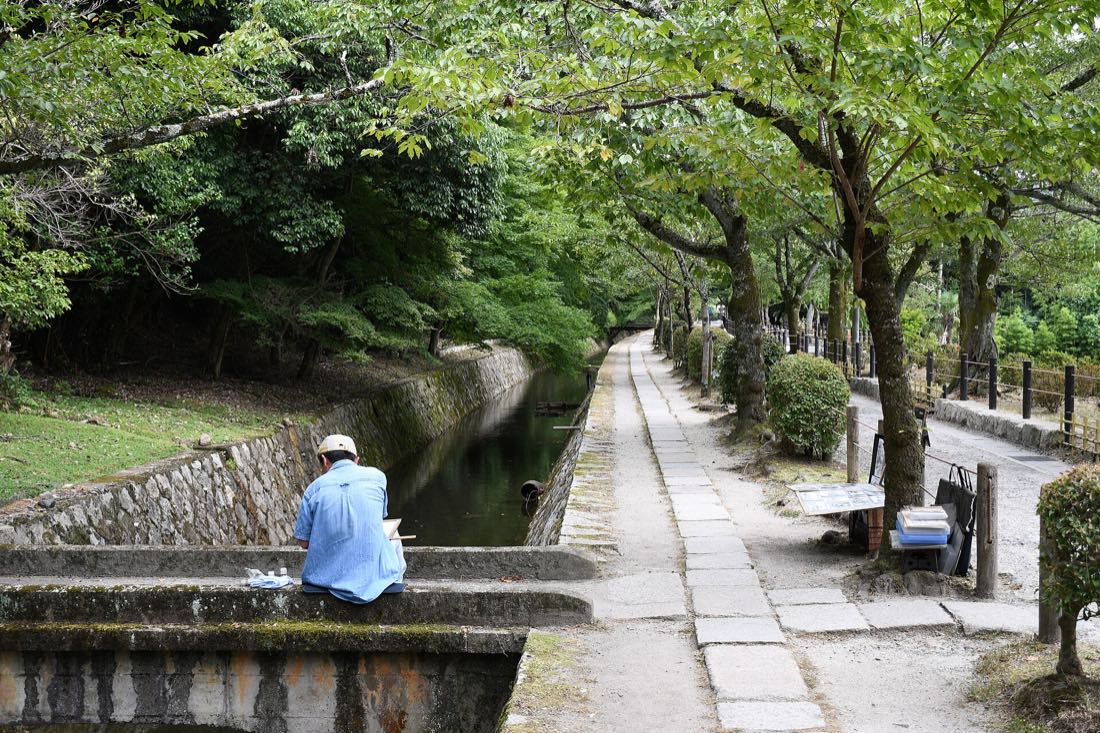
Northern Higashiyama:
the best walking
day in Kyoto
Give this district a full day and walk it south to north: Nanzen-ji (grounds free, brick aqueduct, ¥600 for the Sanmon gate), Eikan-do (¥600, about ¥1,000 in autumn, 3,000 maples and Kyoto's best autumn temple), the canal-side Philosopher's Path, and Ginkaku-ji (¥500) at the end. It is leafy, flat, contemplative and full of museums, and it holds a fraction of the crowd that Southern Higashiyama does. As a place to sleep it is thin on beds and has no nightlife — but the walk out of your door is unbeatable.
Who Northern Higashiyama is for
This is the second-trip district, and the district people who live in Kyoto actually recommend. It is quieter, greener and more cultured than Gion, and about a third cheaper.
Stay here if you have been to Kyoto before, if you like art — the Kyocera Museum of Art and MoMAK are both in Okazaki — if you walk a lot, or if you are coming for cherry blossom or autumn colour. In early April the weeping cherries around Heian Shrine's garden are the best in the city, and from about 20 November to 5 December Eikan-do is the single best maple temple in Kyoto.
Avoid it if you want restaurants and bars on your doorstep. Evenings here are quiet to the point of empty, and the Ginkaku-ji end of the district has no train at all — it is buses or a 25-minute walk to the nearest subway. Hotel stock is thin: expect to choose between three or four properties rather than three hundred.
The geography: the Tozai subway runs along the southern edge with stations at Higashiyama and Keage. Keage is the good one, because you arrive at Nanzen-ji through the nejirimanpo — a short tunnel built of spiral-laid brick under the old canal incline, which is a small piece of theatre for free. From Keage everything below is on foot.
How it compares on price and transit is on the where to stay hub; the neighbouring district is Gion, 20 minutes south on foot.
The walk, south to north
Start at Keage station at 08:30 and you will finish at Ginkaku-ji around 15:00 having spent roughly ¥2,300, walked four kilometres and queued for nothing.
Nanzen-ji — grounds free. Head temple of its Rinzai school, with a colossal wooden Sanmon gate you can climb for ¥600 and, behind it, the Suirokaku: a Meiji-era red-brick Roman-style aqueduct running straight through a zen temple complex, which is as strange as it sounds and completely free to walk under. The subtemple gardens run ¥400–600 each and Nanzen-in is the pick.
Eikan-do Zenrin-ji — ¥600, rising to about ¥1,000 in the autumn illumination season. Around 3,000 maples on a hillside, a pagoda you climb to for the view, and the Amida statue that looks back over its shoulder. In late November this is the most beautiful ticket in Kyoto and also a queue; in June it is empty and lush.
The Philosopher's Path — free, two kilometres of canal-side walking. Be honest with yourself about this one: in sakura season it is genuinely lovely and lined end to end with cherry trees, and for the other ten months it is a pleasant ordinary canal path with cafés on it. It is a way to get from Eikan-do to Ginkaku-ji, not a destination.
Honen-in — free, and the best-kept secret on the path. A thatched gate, two raked sand mounds, moss, and usually nobody. Shoren-in — ¥600, at the southern end near Chion-in, with four vast 800-year-old camphor trees outside the wall and an unusually calm garden inside. Ginkaku-ji — ¥500, the Silver Pavilion that was never silvered, with a sand cone and the best moss garden in the district; verdict on its own page and the head-to-head at Kinkaku-ji vs Ginkaku-ji.
Okazaki and Heian Shrine — the shrine grounds and its 24-metre vermillion torii, the largest in Japan, are free; the Shin-en garden behind is ¥600 and worth it in the first week of April for the weeping cherries. The Kyocera Museum of Art and the National Museum of Modern Art face each other across the same park, both around ¥700–1,800 depending on the exhibition.
Where to eat in Northern Higashiyama
Thin, and that is the district's real weakness. Lunch is easy, dinner takes planning, and after 21:00 there is nothing.
Lunch: the yudofu restaurants outside Nanzen-ji are the local institution — simmered tofu sets for roughly ¥3,000–5,000, served in gardens, and better than that description suggests on a cold day. Cheaper: the cafés along the Philosopher's Path do sandwiches, curry and coffee for ¥900–1,500, and the Okazaki museums have decent café-restaurants.
Dinner: the good places are small, owner-run and need reserving. The most-wanted table in the district is a modern kaiseki counter on the Philosopher's Path that opens bookings exactly two months ahead at 12:00 JST and sells out within seconds — set an alarm and pre-fill the form, or accept you will not get it.
The realistic plan is to walk the district by day and eat downtown. Tozai subway from Higashiyama or Keage to Karasuma-Oike takes 6–8 minutes and puts you in the middle of a thousand restaurants. Twenty minutes on foot south gets you to Gion for kaiseki.
One reliable local pleasure: matcha and a sweet at a temple tea room mid-walk, usually ¥800–1,200 including admission at places like Shoren-in. See the matcha page for what you are drinking.
The walk, temple by temple
In walking order from Keage station. Times assume you actually stop and look.
| Stop | Entry | Time | Best month | Verdict |
|---|---|---|---|---|
| Nanzen-ji grounds and aqueduct | Free | 40 min | Any | WORTH IT |
| Nanzen-ji Sanmon gate | ¥600 | 20 min | Nov | DEPENDS |
| Eikan-do Zenrin-ji | ¥600 · ~¥1,000 autumn | 60 min | Late Nov | WORTH IT |
| Philosopher's Path | Free | 40 min | Early Apr | DEPENDS |
| Honen-in | Free | 20 min | Jun | WORTH IT |
| Ginkaku-ji | ¥500 | 45 min | Nov | WORTH IT |
| Shoren-in | ¥600 | 30 min | Any | WORTH IT |
| Heian Shrine grounds | Free | 20 min | Any | WORTH IT |
| Heian Shrine Shin-en garden | ¥600 | 40 min | Early Apr | DEPENDS |
| Kyocera Museum of Art | ¥700–1,800 | 90 min | Rainy days | DEPENDS |
Entry fees for the full walk come to about ¥2,300 per person if you pay for Eikan-do, Ginkaku-ji, Shoren-in and the Sanmon gate. Skip all four and the district is still a good day for nothing.
Northern Higashiyama, practically
Where to sleep in Northern Higashiyama
Bed stock is thin, which is the price of the calm. The Westin Miyako Kyoto sits on the hillside above Keage with the district's best views, Hotel Okura's Okazaki Bettei is the quiet luxury option, ryokan Yachiyo sits at the Nanzen-ji gate, and budget rooms start around $70. Book early in April and late November — the maple and cherry weeks empty this district's small inventory first.
The efficient way to cover this district
Kyoto is flat and Northern Higashiyama is spread out — this is the one part of the city where a bike genuinely beats walking, because it links Okazaki, Nanzen-ji and Ginkaku-ji without the bus.
Northern Higashiyama FAQ
Is the Philosopher's Path worth it?
In cherry blossom season, yes — it is two kilometres of canal lined with cherry trees and it is genuinely beautiful for about ten days from late March. The rest of the year it is a pleasant ordinary canal path with cafés. Walk it as the link between Eikan-do and Ginkaku-ji rather than as a destination.
What is the best autumn temple in Kyoto?
Eikan-do, on most people's reckoning: around 3,000 maples on a hillside, ¥600 normally and about ¥1,000 during the autumn illumination. Peak is 20 November to 5 December and drifts later in warm years. Tofuku-ji in the south is the other contender and is more crowded.
Is Northern Higashiyama a good place to stay?
For second-time visitors and walkers, yes — it is calmer than Gion, about a third cheaper, and the best walking day in Kyoto starts at your door. For nightlife or restaurant choice, no. There are very few beds here, so book early for April and late November.
How do you get to Ginkaku-ji?
There is no train. Either walk the Philosopher's Path from Eikan-do, which takes about 40 minutes and is the point of the exercise, or take bus 5 or 17. It is ¥500 to enter and about 45 minutes to see properly. Compared with the Golden Pavilion on this page.
Is Nanzen-ji free?
The grounds are, including the huge Sanmon gate from the outside and the red-brick Suirokaku aqueduct running through the complex. Climbing the gate is ¥600 and the subtemple gardens are ¥400–600 each. You can have an excellent hour here without paying anything.
What is there to do in Okazaki?
Heian Shrine with its 24-metre torii (grounds free, the Shin-en garden ¥600 and best in the first week of April), the Kyocera Museum of Art, the National Museum of Modern Art, the zoo and a canal you can take a boat along in cherry season. It is the city's museum quarter and the best rainy-afternoon block outside the rainy day list.
How long does the Northern Higashiyama walk take?
Five to six hours at a real pace, covering about four kilometres from Keage station to Ginkaku-ji with stops. Entry fees total roughly ¥2,300 if you pay for everything. Start at 08:30 and you will be ahead of the coaches all day.