Is a ryokan worth it in Kyoto?
Yes, once. The arithmetic that makes a ¥60,000 room make sense is the dinner: in-room kaiseki at that tier is a ¥15,000–30,000 per head meal, served course by course by someone who is also your room attendant. Price the night against a hotel plus a restaurant, not against a hotel. Book one or two nights, not five — the fixed dinner and check-in times run your evening, and the most common regret people report is either that one night was not enough or that four were too many. Note the lodging tax bites hardest here: a ¥50,000 room now carries ¥4,000 per person per night.
Kyoto ryokan by tier, with names
Rates are per room per night for two people in 2026, including dinner and breakfast unless noted. At ¥158 to the dollar, the lodging tax lands on top and is charged per person.
| Tier | Rate | Examples | What you get | Verdict |
|---|---|---|---|---|
| Budget | Under $300 | Matsubaya from around $100 · Izuyasu | Tatami, futon, a yukata and a Japanese breakfast. Often shared bathrooms and no in-room dinner. The honest entry point, and closer to a very good guesthouse than to the full experience | WORTH IT |
| Mid-range | $300–600 | Seikoro, around $500 — widely called the best overall value in Kyoto | The real thing: private bathroom, in-room kaiseki dinner, futon laid while you eat, attentive service without theatre. This is the tier to book if you are booking one night | WORTH IT |
| Luxury | $600–1,000 | Hiiragiya, a Meiji-era house with a literary history | Antique rooms, garden views, a level of anticipatory service that is genuinely hard to describe. Multi-course dinner by a dedicated kitchen | DEPENDS |
| The benchmark | $1,000+ | Tawaraya | Three centuries old and the name every other ryokan is measured against. Fourteen rooms. Booking requires effort and often a referral or a hotel concierge | DEPENDS |
| Resort | $1,500–2,500 | Hoshinoya Kyoto, in Arashiyama | Reached by private boat up the Oi River. A modern reinterpretation rather than a classic ryokan, and the most photographed arrival in Kyoto | DEPENDS |
| Temple lodging | ¥6,000–10,000 | Shukubo at Myoshin-ji subtemples | The cheaper cousin: a tatami room inside a working Zen temple, vegetarian shojin ryori, and morning zazen meditation you are expected to attend. Simple, quiet, and the best-value night on this table | WORTH IT |
The lodging tax is where the tiers bite differently. A ¥50,000 room carries ¥4,000 per person per night — ¥8,000 for a couple, on top — and anything at ¥100,000 or more carries ¥10,000 each. At the ¥20,000–49,999 band it is ¥1,000 each, which is why one great night often beats two good ones.
Why the rate is not really the room rate
A ¥60,000 ryokan night looks absurd next to a ¥12,000 business hotel until you separate the components. You are buying a room, a two-hour dinner and a breakfast from one bill.
Kaiseki dinner at that tier costs ¥15,000–30,000 per head in a restaurant. A couple eating a comparable meal downtown would spend ¥30,000–60,000 before drinks. Served in your room, course by course, by the same person who greeted you at the door and will lay your futon while you eat. Subtract that from the rate and the room itself is priced like a good hotel.
Breakfast is included and is a full Japanese meal — grilled fish, rice, miso, pickles, tamagoyaki, often ten small dishes. Call it another ¥3,000 a head.
What you are not buying is a base. A ryokan is a poor headquarters for sightseeing: dinner is served at a fixed hour, usually between 18:00 and 19:00, and check-in windows are narrow because the kitchen is cooking to them. A day that ends with Gion at 17:45 and Pontocho at 19:30 is not compatible with it. Book the ryokan for a night when the ryokan is the plan.
The best-value version of the whole idea is often the mid tier at $300–600 rather than the famous names — Seikoro is the one repeatedly named as the best balance of the real experience and a defensible price. And the cheapest version, shukubo temple lodging at Myoshin-ji's subtemples for ¥6,000–10,000 with zazen in the morning, delivers a different but genuinely memorable night for a tenth of the money.
What actually happens on a ryokan night, hour by hour
The structure is fixed and it is the point. If you arrive expecting hotel flexibility you will spend the evening slightly out of step with the building.
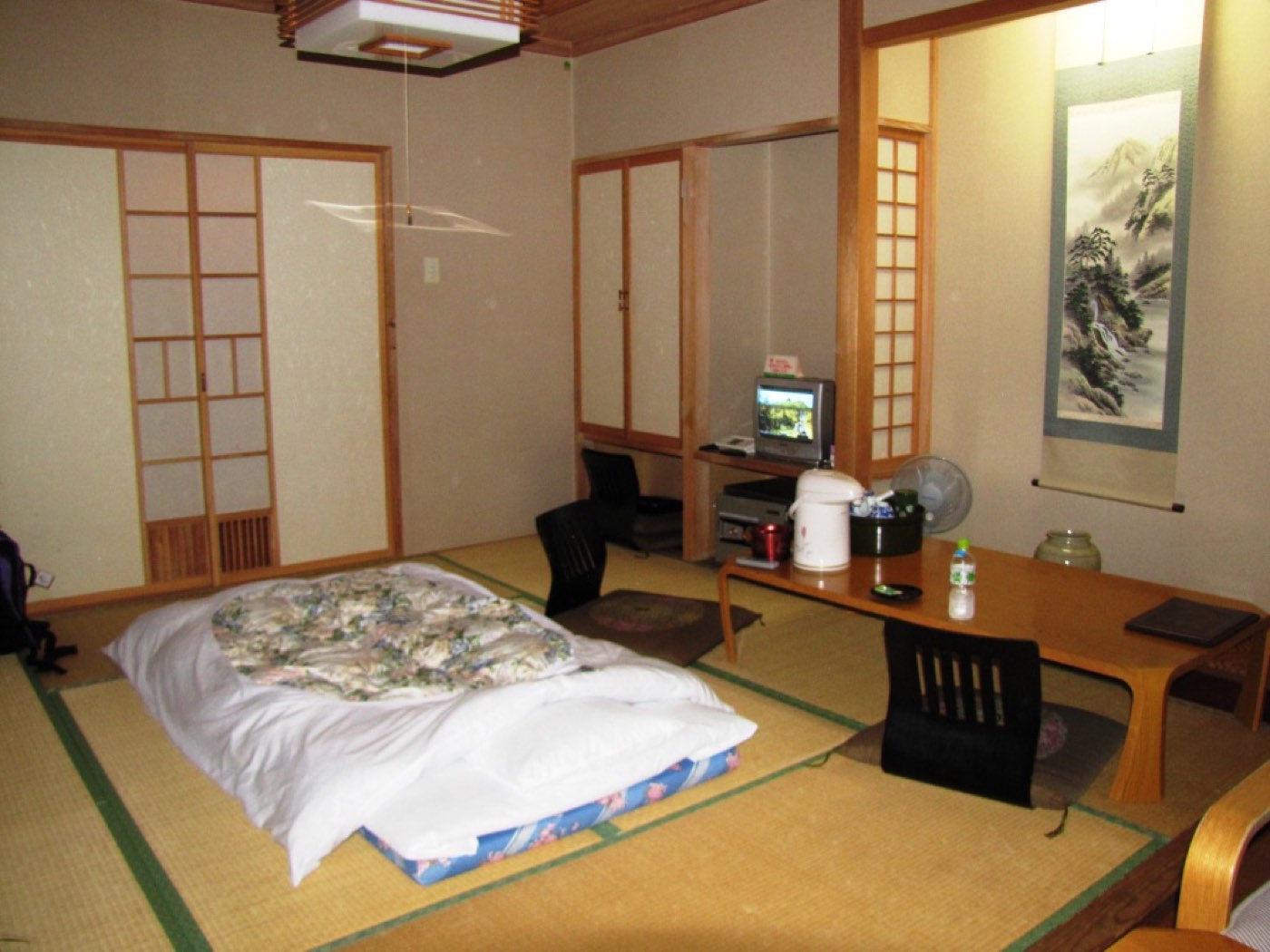
15:00–16:00 — arrival. Shoes off at the entrance, into slippers, and slippers off again at the tatami. Someone shows you to the room, which is one open space with a low table, a scroll and a garden view. You are given a yukata and shown how to wear it — left over right — and it is what you wear for the rest of the evening, including at dinner and around the building.
16:00 — tea and a sweet. Green tea and a wagashi are brought to the room while your attendant confirms dinner and breakfast times. This is when to ask about the bath and whether it is private, shared by gender, or bookable in slots.
17:00 — the bath, before dinner. You wash and rinse thoroughly on a stool outside the tub, then get in to soak. The water is very hot. The bath is for soaking, never for washing. At smaller ryokan the bath is booked in 45-minute private slots.
18:00–19:00 — dinner, in the room. Kaiseki, eight to fourteen courses, brought and explained one at a time over about two hours, seasonal and largely non-negotiable. Tell them about allergies and hard dislikes at booking, not on the night — the menu is bought and prepped days ahead.
During dinner — the futon appears. You leave the room briefly, or step aside, and staff lay the futon on the tatami while you are still at the table. There is no bed until this happens, which surprises people who go looking for one.
07:30–08:30 — breakfast, then out. A full Japanese breakfast at a fixed time, and check-out is usually 10:00 or 11:00. It is an early morning by design, which fits Kyoto's 6:00 temple openings better than it sounds.
The rules that catch people out
None of these are secret, and all of them appear in the confirmation email that people do not read.
Dinner and check-in times are fixed. Arriving at 19:30 because you wanted one more temple means a cold first course and an awkward conversation. If your flight or train lands late, book a hotel that night and the ryokan the next.
Tattoos are a problem at some baths. Policies vary and are loosening, but a shared bath at a traditional house may refuse visible tattoos outright. Ryokan with private in-room or bookable baths sidestep it entirely — ask before booking, not at check-in.
Shared bathrooms at the budget end. Under $300, a private en-suite is the exception. That is the trade at that tier and it is a reasonable one; just know it before you arrive.
Children are not always welcome. Several of the top houses set a minimum age, because the room is a shared, unpartitioned tatami space and the dinner service is two hours long.
No tipping, ever. Attempting it causes genuine discomfort. Service is included and the standard is not negotiable.
The most common regret is booking only one night — people report finally relaxing into the rhythm at breakfast, as they check out. Two nights is the sweet spot. Five is too many, because you will be eating an enormous set dinner in your room every evening in a city with the best restaurants in Japan outside Tokyo.
Is a ryokan for you?
Finding the right ryokan
The famous houses take direct bookings and sometimes require a referral; everything below the top tier is on the usual platforms. Book the ryokan night around your itinerary, not the other way round.
Kyoto ryokan FAQ
Is a ryokan worth it in Kyoto?
Yes, for one or two nights. The in-room kaiseki dinner alone would cost ¥15,000–30,000 per head in a restaurant, which is what makes a ¥60,000 room rate defensible. It is a poor base for sightseeing, though — dinner is at a fixed hour and check-in windows are narrow.
How much does a ryokan cost in Kyoto?
Under $300 a night at the budget end, where Matsubaya starts around $100. $300–600 for the real experience with in-room kaiseki, where Seikoro at about $500 is the most recommended. $600–1,000 for Hiiragiya, $1,000+ for Tawaraya, and $1,500–2,500 for Hoshinoya in Arashiyama.
How many nights should I stay in a ryokan?
Two. One night leaves people saying they only relaxed into it as they checked out; five means an enormous set dinner in your room every evening in a city full of restaurants you will not get to. Spend the rest of the trip in a hotel — see where to stay.
What happens at a ryokan — what should I expect?
Check in around 15:00, change into a yukata, tea and a sweet in the room, a very hot bath before dinner, then eight to fourteen kaiseki courses served in your room over two hours. Staff lay the futon on the tatami while you eat. Breakfast is a full Japanese meal at a fixed time, and check-out is usually 10:00 or 11:00.
Can I stay at a ryokan with tattoos?
It depends on the bath. Some traditional houses refuse visible tattoos in shared baths, though policies are loosening. Book a ryokan with a private in-room bath or bookable private slots and the question disappears — ask before booking rather than at check-in.
Is there a cheaper alternative to a ryokan in Kyoto?
Shukubo temple lodging. Several Myoshin-ji subtemples take guests for ¥6,000–10,000 including a vegetarian shojin ryori dinner and morning zazen meditation. It is a tatami room in a working Zen temple, and it is the best-value night in Kyoto.
Do I have to eat dinner at the ryokan?
At the mid and top tiers, effectively yes — the dinner is the reason the rate makes sense and the kitchen has bought for you. Some ryokan offer a room-only rate; if you want to eat out every night, book a hotel and spend the difference on restaurants. See how kaiseki pricing works.
How much lodging tax do I pay at a ryokan?
It depends on the room rate and it is charged per person per night. A ¥50,000 room carries ¥4,000 each — ¥8,000 a night for a couple — and ¥100,000 or more carries ¥10,000 each. Between ¥20,000 and ¥49,999 it is ¥1,000 each. Full detail on the cost page.