Where to get
breakfast in Kyoto
This site tells you to be at Kiyomizu-dera at 6:00 and Fushimi Inari at 6:15, and then Kyoto refuses to feed you: the overwhelming majority of restaurants and cafés here open at 10:00 or 11:00. The list that does not is short and worth memorising. Shinpachi Shokudo and Honke Daiichi-Asahi open at 6:00; Inoda Coffee Honten, Komeda, Yayoiken and Nomura open at 7:00; Smart Coffee at 8:00. Below that, konbini — the ¥250 egg sandwich is genuinely good and there is one on every second corner.
Kyoto does not do breakfast
It is the most underrated planning problem in the city. Kyoto's restaurant culture is built around lunch from 11:30 and dinner from 17:30, and outside the hotels almost nothing serves food before 10:00.
This collides directly with the one piece of advice everybody gives about Kyoto, which is to start early. Kiyomizu-dera opens at 6:00. Fushimi Inari never closes. The bamboo grove is only tolerable before 8:30. Every good Kyoto morning starts before the city is willing to sell you coffee.
So the honest structure of a dawn day is: eat something small at 6:00 or before you leave, sightsee for three hours, then have a proper breakfast at 8:00 or 9:00 when the kissaten open. Treating breakfast as the second thing you do rather than the first is the fix.
The alternatives to the list below are three: your hotel (convenient, usually ¥2,000–4,000, rarely memorable and often a Western buffet), a konbini (fast, cheap, genuinely decent), or the depachika at Takashimaya and Daimaru — excellent, but they open around 10:00, which does not help at dawn.
One good piece of news: Kyoto's kissaten culture is deep, and kissaten open earlier than cafés. That is where this page mostly points you.
Everywhere that opens early, with times
Opening times for small independents drift — confirm on Tabelog the day before if a 6:00 start is load-bearing for your plan.
| Where | Opens | What you get | Price | Verdict |
|---|---|---|---|---|
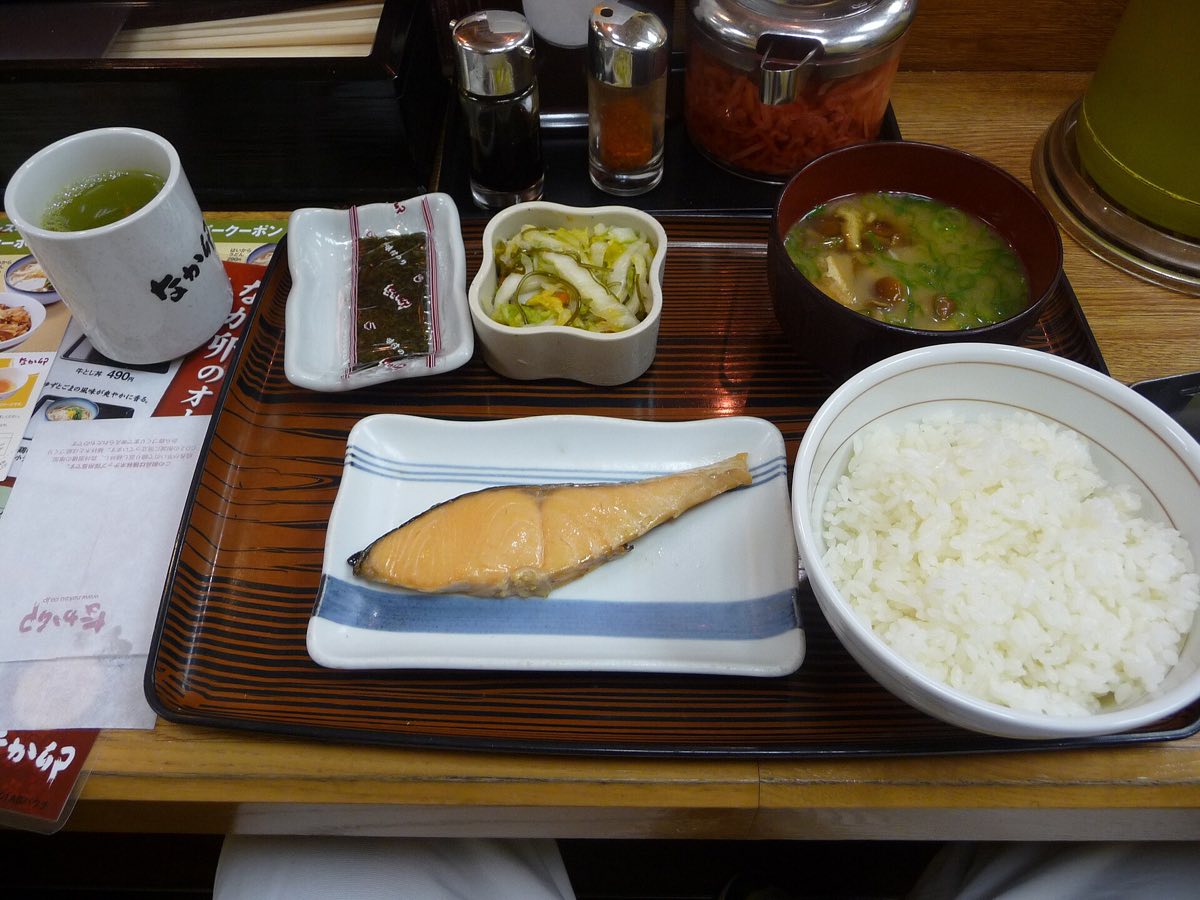
| Shinpachi Shokudo | 6:00 | Charcoal-grilled fish teishoku — grilled mackerel or salmon, rice, miso, pickles. Free rice refills | ¥800–1,200 | WORTH IT |
| Honke Daiichi-Asahi | 6:00 | Breakfast ramen, and not a gimmick — dark shoyu with pork back fat, since 1947 | ¥900–1,200 | WORTH IT |
| Inoda Coffee Honten | 7:00 | Kyoto's breakfast institution since 1940. The Kyoto morning set: thick toast, egg, ham, salad, their own blend | ¥1,300–2,000 | WORTH IT |
| Komeda Coffee | 7:00 | Nagoya chain, everywhere in Kyoto. Order a coffee before 11:00 and toast with egg arrives free | ¥500–700 | WORTH IT |
| Yayoiken | 7:00 | Teishoku chain — grilled fish or natto set with free rice refills from a machine at the table | ¥600–900 | WORTH IT |
| Nomura | 7:00 | Obanzai for breakfast — Kyoto home cooking as a morning spread. The most local option on this list | ¥1,500–2,500 | WORTH IT |
| Smart Coffee | 8:00 | Est. 1932. The tamago sando and the French toast are the order; the room has not changed in decades | ¥600–1,200 | WORTH IT |
| 7-Eleven / Lawson / FamilyMart | 24 hours | The ¥250 egg sandwich, onigiri from ¥150, hot coffee from ¥120. Unironically good | ¥250–600 | WORTH IT |
| Hotel breakfast | 6:30–7:00 typically | Convenient and forgettable. Worth it if it is included; rarely worth ¥3,000 if it is not | ¥2,000–4,000 | DEPENDS |
| Takashimaya / Daimaru depachika | About 10:00 | Superb, and useless for a dawn start. Bank it for a picnic lunch instead | ¥800–2,000 | DEPENDS |
Honke Daiichi-Asahi at 6:00 is the most Kyoto answer on this list — a bowl of back-fat ramen before sunrise, then Fushimi Inari five minutes away by train. More on it on the ramen page.
Kissaten and the morning set
A kissaten is a pre-war Japanese coffee house: dark wood, velvet seats, a siphon or a hand drip, a proprietor who has done this for forty years, and no laptops. Kyoto has more of them per capita than anywhere in Japan and they are the reason breakfast here is worth planning.
The mechanism to know is "morning service". Order a coffee before about 11:00 and the toast, boiled egg and sometimes a small salad come free — you pay ¥500–700 for the coffee and breakfast is included. Komeda built a national chain on it and independent kissaten across Kyoto do the same thing. It is the best-value meal in the country.
Inoda Coffee Honten (1940) is the institution — a courtyard building in the Sanjo area, a horseshoe counter, waiters in white, and a morning set that regulars have eaten every day for decades. It opens at 7:00 and there is usually a small queue by 8:00 that moves quickly. Order the Arabian Pearl blend, which the house serves with milk and sugar already in it.
Smart Coffee (1932) opens at 8:00 on Teramachi and is the other essential one. The tamago sando — a thick folded omelette between crustless white bread — is the thing to order, and the French toast is the thing people order instead and do not regret.
Both of these are short walks from downtown hotels and neither takes reservations. Neither is expensive: ¥600–2,000 covers it.
Third-wave coffee, and the queue to avoid
For 9:00 onward, Kyoto's specialty coffee scene is genuinely strong and mostly free of queues — with one loud exception.
Weekenders Coffee — hidden behind a downtown car park, which is not a marketing line, it is literally at the back of a parking lot. The city's roasting pioneer, a tiny standing window, and the best cup in central Kyoto. Fifteen minutes, no seats to speak of.
Kurasu — one branch near Kyoto Station, one on Ebisugawa. Clean, precise, brew bar, and a good place to sit down with a laptop, which most kissaten are not.
wife&husband — near the Kamo River in the north, and the reason to go is that they rent you a basket, a rug and a folding stool so you can take your coffee to the riverbank. Best thing on this page on a clear morning in April or November.
Walden Woods — an all-white converted building near Gojo with a stepped seating gallery. More an interior than a café, and it photographs like it.
%Arabica is the one to counter-programme. The Arashiyama branch has a spectacular riverside position and 30–60 minute waits, for coffee that reviewers consistently call average. If you are in Arashiyama at 8:00 you have better things to do with 45 minutes — the bamboo grove empties at exactly that hour and refills at 9:00.
Mornings worth booking
Breakfast itself needs no booking anywhere on this page. What is worth booking is the thing you do straight afterwards, while the city is still empty.
Kyoto breakfast FAQ
Where can I get breakfast in Kyoto?
Shinpachi Shokudo and Honke Daiichi-Asahi open at 6:00. Inoda Coffee Honten, Komeda, Yayoiken and Nomura open at 7:00. Smart Coffee opens at 8:00. Below that, convenience stores are open 24 hours and the ¥250 egg sandwich is genuinely good.
Why does nothing open early in Kyoto?
Kyoto's restaurant culture runs on lunch from 11:30 and dinner from 17:30, with small independent kitchens that do both services themselves. Breakfast was historically eaten at home. The result is that most cafés and restaurants open at 10:00 or 11:00, which collides with every early-start itinerary.
What is a morning set in Japan?
Order a coffee at a kissaten before about 11:00 and toast, a boiled egg and sometimes salad come free with it. You pay ¥500–700 for the coffee. Komeda built a national chain on the format and independent Kyoto kissaten do the same thing.
Is the konbini egg sandwich actually good?
Yes, and it is about ¥250. The 7-Eleven tamago sando is a fixture of Japan trip reports for a reason — soft crustless bread, egg salad with a little dashi in it. Add an onigiri from ¥150 and a ¥120 hot coffee and breakfast costs under ¥550.
Should I pay for hotel breakfast in Kyoto?
Only if it is included in the rate. Standalone hotel breakfast runs ¥2,000–4,000 for a buffet you could get anywhere, while Inoda's morning set is ¥1,300–2,000 and Komeda's is ¥600. If you are leaving at 6:00 anyway, you will miss it regardless.
Where is the best coffee in Kyoto?
Weekenders, hidden behind a downtown car park, for the best single cup. Kurasu near the station and on Ebisugawa for somewhere to sit. wife&husband for a riverside picnic set. Skip the 30–60 minute %Arabica queue in Arashiyama — reviewers call the coffee average.
Can I eat before a 6am temple start?
Yes. Honke Daiichi-Asahi serves ramen from 6:00, Shinpachi Shokudo does a grilled-fish set from 6:00, and every convenience store is open all night. A ¥250 egg sando eaten walking to Fushimi Inari at 6:15 is a perfectly respectable Kyoto breakfast.
Continue planning
Eat it with a local
Kyoto food tours & tastings — guided street-food crawls and cooking classes with vetted operators, most with free cancellation.